The button in poker marks the dealer position and sets betting order. In no-limit Hold ’Em cash games, the button acts last postflop, which is why positional tracking in BB/100 consistently shows the strongest results in late position, while the blinds are structurally negative because they post forced bets.
If you are searching “What is a button in poker?” or “What is the button in poker?”, the short answer is this: it is the seat that maximizes information and minimizes forced action.
What Is the Button in Poker, and Where Does It Sit?
It is a dealer position marker that rotates each hand and determines who acts first preflop and last postflop.
Dealer Poker Button Position as a Marker
The button, also called the dealer button, is a physical marker that identifies which seat is treated as the dealer for a single hand.
In casino poker rooms, a house dealer runs the game, shuffles and handles chips, but the button still rotates one seat clockwise after each hand to preserve fair position. This rotation determines who posts blinds, who acts first preflop, and who closes action after the flop.
Under Robert’s Rules of Poker, the small blind is posted by the player immediately clockwise from the button, and the big blind (BB) is posted two seats clockwise, keeping one consistent big blind each hand.
Online platforms follow the same structure. On major regulated rooms and many offshore platforms, the software visually places a white disk labeled “D” in front of the button seat.
Whether playing on regulated US platforms or international online casino sites, the rules remain consistent even when table sizes shrink to six or fewer players.
Live and Online Rule Variations by Operator
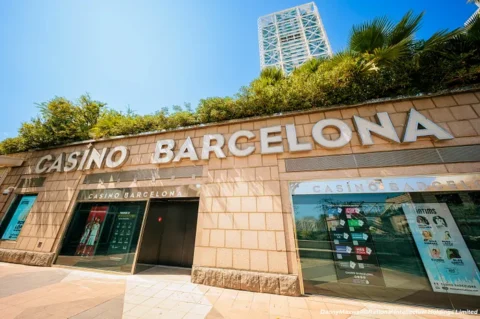
While the button concept is universal, operators vary in how they handle edge cases. In live poker rooms such as the Bellagio in Las Vegas or Casino Barcelona, a dead button rule applies if players leave mid-hand.
Many live rooms use a dead button rule so the button never jumps forward to an empty seat, preserving blind continuity when seats open. Online platforms typically automate this adjustment, instantly recalculating blind responsibility.
These differences affect expected value. Consider a six-handed cash game with blinds of $1 and $2. If a dead button causes one seat to avoid posting the big blind once every 50 hands, that seat saves $2 per occurrence. Across 1,000 hands, that equals $40 in reduced forced bets.
On high-volume online tables, this structural consistency is one reason many players favor fast payout sites for frequent sessions where position cycles remain stable and automated.
How the Button Controls Betting Order in Poker
Betting order is where position becomes measurable because acting last turns other players’ actions into usable information.
Postflop Action and Information Advantage
After the flop, the player on the button always acts last in every betting round. That sequence repeats on the turn and river, creating three consecutive opportunities to respond, rather than react.
Seeing checks, bet sizes, and timing from every opponent before acting materially improves decision quality. In a nine-handed game, the button faces eight prior actions on the flop, while the player under the gun acts with zero.
Poker math highlights why this matters; acting last allows narrower value bets and lower-cost bluffs. Wizard of Odds’ poker probability analysis notes that an informational advantage reduces uncertainty in expected-value calculations, particularly in marginal spots where pot odds and implied odds converge.
For example, on the flop, a nine-out flush draw has 19.1 percent equity to hit on the turn, so calling a half-pot bet only becomes profitable when implied odds or fold equity make up the gap.
Modern 100BB cash-game opening charts put a full-ring UTG open at about 10 percent and a button open at about 40 percent of hands, reflecting how few players remain to act and how often you keep position postflop. That gap is the practical reason the poker button position prints more EV per hand than early seats.
Blind Positions and Forced Action Pressure
The small blind and big blind sit immediately to the left of the button, posting forced bets before any cards are seen. Preflop action starts left of the big blind, meaning the button closes action before the flop, but opens information advantage after it.
Consider a $1 and $2 cash game. The big blind automatically invests $2, then faces a $6 raise from the button. Calling requires $4 more to compete for a $9 pot, offering immediate pot odds near 31 percent. Without positional advantage postflop, that call often becomes negative expected value, unless hand strength compensates.
This is why blind win rates trend negative across large databases.
|
Position |
Forced Cost if Folding Always |
Baseline Outcome |
|
Small Blind |
-50 BB/100 |
Starts down half blind |
|
Big Blind |
-100 BB/100 |
Starts down one blind |
|
Button |
0 forced blinds |
Plays with full optionality |
Online environments amplify this pressure. Many online poker sites structure fast-fold tables where blind positions cycle rapidly, increasing the frequency of forced decisions without positional leverage. In contrast, the button consistently preserves optionality.
Why the Button in Poker Is the Most Profitable Seat
Profit in poker tracks position more reliably than hand strength.
Wider Opening Ranges and Pot Control
The button allows players to open more hands preflop because fewer opponents remain to act.
In a nine-handed cash game, an under-the-gun open risks eight responses, while a button open faces two blinds. That reduction alone shifts expected value. In common 100BB charts, the button opens around 40 percent, as shown below.
Postflop, acting last enables precise pot sizing. Value bets can target exact calling ranges, rather than guessing at resistance. Bluffs cost less because they encounter fewer unknowns. The ability to check back marginal hands also preserves bankroll stability.
This control explains why long-term tracking consistently places the poker button position at the top of positional win-rate charts.
PokerBench, a 2025 benchmark built with solver-derived optimal decisions across 11,000 Hold ’Em scenarios, frames poker as an incomplete-information problem where better decisions come from processing action, ranges, and probabilities faster than opponents.
On the button, you see more actions before committing chips, so you are literally operating with more information per decision than any other seat.
|
Position |
Open-Raise Rate (100BB) |
|
UTG |
10% |
|
Cutoff |
25.6% |
|
Button |
40.5% |
Blind Steals and Pressure Application
The button also drives blind pressure. Raising from late position targets forced bets already in the pot, making steals mathematically efficient even without premium cards. In a $1 and $2 game, a $5 button raise risks $5 to win $3 in blinds, requiring success slightly over 62 percent to break even.
Even when you do not take it down immediately, position lets you recover EV through postflop pressure.
Skilled players layer this pressure by mixing continuation bets and delayed aggression. The button’s visibility into opponent tendencies sharpens these tactics.
Platforms that offer frequent incentives, such as poker bonus codes, often attract high-volume play, which further magnifies positional edges through repetition and familiarity with data.
How Strategy Changes on and Against the Button
Once the position is understood, the strategy sharpens quickly. The button forces opponents to respond more actively while rewarding disciplined aggression from the seat itself.
Defending Blinds and Adjusting Three Bet Frequency
When the button opens, blind players face a structural disadvantage that demands adjustment. Folding too often leaks value because the button open targets forced bets already in the pot. Modern strategy, therefore, increases the frequency of blind defence against late-position raises, primarily through selective three-betting.
In a $1 and $2 cash game, the pot contains $3 before the action. A button raises to $5, risking $5 to win $3. If both blinds fold more than 62 percent of the time, the raise profits immediately.
According to Wizard of Odds, solver-based preflop models show that against a standard 2x button open, the big blind must defend just under 60 percent of hands, split between calls and three bets, to prevent the button from profiting automatically from blind steals.
|
Spot |
Call Rate |
3-Bet Rate |
|
BB vs BTN 2x Open |
49.2% |
10.4% |
A three bet to $16 from the big blind risks $14 to win $8, requiring folds roughly 64 percent of the time to show immediate profit. This math drives polarized ranges rather than passive calls.
Planning Hands With Positional Awareness
From the button, the strategy simplifies because decisions are filtered through observable action. Continuation betting frequencies increase since missed flops still retain fold equity. Marginal hands gain value through delayed aggression and controlled pot sizes.
This clarity accelerates learning. PokerBench models Hold ’Em as an incomplete-information problem and shows performance improves when agents process action and ranges efficiently, which mirrors why the button benefits from seeing more decisions before committing chips.
Consider a button-held Ace of hearts and 10 of hearts facing a single big blind defender. After a Queen of spades, 7 of clubs, and 2 of diamonds flop, a half-pot bet risks $6 to win $12. If the defender folds over one-third of the time, the bet remains profitable without immediate equity. Acting last ensures this calculation remains stable across streets.
Mastery of button play merges math with timing, making positional awareness one of the fastest paths to sustained improvement.
Now You Know What the Poker Button Is
To actually profit from the button, treat it as a frequency and pressure advantage, not just a “last-to-act” perk. Open wider than default charts allow when blinds over-fold, size raises to target forced bets efficiently, and plan hands backward from the river knowing you control the final decision.
Conversely, when out of position against the button, track your blind defence rates and three-bet frequency to ensure you are not donating EV through passive folds. Mastery of the button is not theoretical—it shows up directly in win-rate graphs over large samples.
Please play responsibly. 21+, T&Cs apply.
About The Author