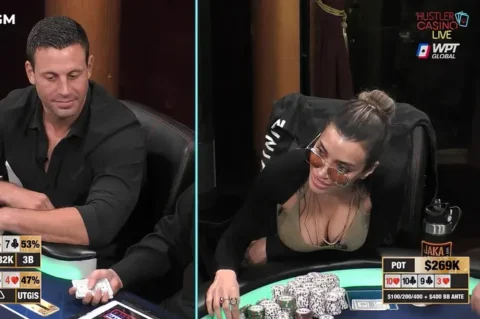
Poker players are often portrayed as always being “on”, analyzing hands, tracking tendencies, calculating odds. In reality, most experienced players know that staying sharp at the table requires knowing when not to compete. Downtime matters, and how that downtime is spent can have a real impact on long-term performance.
Away from the felt, players unwind in different ways. Some watch streams, others scroll strategy forums, and many turn to casual digital entertainment, including social gaming platforms like qqfun, that offer engagement without real money, pressure, or consequences. These activities aren’t about winning or grinding; they’re about mental reset, stimulation, and staying connected without draining decision-making energy.
Decision Fatigue Is Real in Poker
Poker is a decision-heavy game. Every session involves hundreds, sometimes thousands, of micro-choices, each carrying potential financial consequences. Cognitive psychologists have long studied decision fatigue, the gradual decline in decision quality after sustained mental effort, and poker is a textbook example of a profession where it applies.
Experienced players understand this intuitively. They know that forcing more volume when mentally depleted often leads to marginal plays, emotional decisions, and missed value. That’s why rest, recovery, and intentional downtime are not luxuries, they’re part of the job.
Non-competitive games fit neatly into this recovery cycle. They keep the brain engaged without demanding the same level of analytical rigor that poker requires.
Why Non-Competitive Games Work Differently
The key distinction is stakes. In poker, every decision carries weight. In non-competitive or social games, outcomes don’t follow players beyond the moment.
This difference matters. When there is no bankroll impact, no long-term scorekeeping, and no opponent exploiting mistakes, the brain shifts into a different mode. Engagement becomes exploratory rather than defensive. Players can interact, react, and enjoy the experience without constantly evaluating risk versus reward.
For poker players, this kind of engagement offers stimulation without strain. It keeps pattern recognition and reaction timing active, while allowing the analytical parts of the brain to rest.
Mental Reset Without Mental Shutdown
There’s a misconception that recovery means disengaging completely. In reality, many high-performance fields, from athletics to chess, emphasize active recovery. The goal isn’t to shut the brain off, but to change how it’s being used.
Casual games, puzzles, and social digital experiences serve this role well. They occupy attention without triggering the same emotional responses tied to loss aversion, tilt, or performance pressure.
For poker players coming off long sessions or extended downswings, this kind of mental reset can be especially valuable. It provides a sense of interaction and momentum without reinforcing negative emotional loops.
Social Interaction Without Competitive Friction
Poker is social, but it’s also adversarial. Every interaction at the table carries an undercurrent of competition, even in friendly games. Over time, that constant edge can become draining.
Non-competitive social gaming removes that friction. Interaction exists for its own sake, chatting, reacting, playing, without the need to outmaneuver or outlast anyone. For many players, this satisfies the social aspect of poker life without adding psychological wear.
This is particularly relevant for online players, who may spend hours in isolation while technically “playing with others.” Social digital spaces offer connection without the constant evaluation of who’s winning and who’s losing.
Staying Engaged During Breaks and Travel

Poker schedules are irregular by nature. Long breaks between tournaments, travel days, and late-night sessions can leave players with awkward pockets of time where they want stimulation but not commitment.
Non-competitive games fill these gaps well. They’re easy to enter, easy to leave, and don’t require preparation or post-session review. That flexibility aligns with the unpredictable rhythms of poker life.
Importantly, because there’s no money involved, there’s no temptation to chase losses or justify time spent as “profitable.” The activity remains what it’s meant to be: leisure.
Avoiding the Trap of Always “Grinding”
One of the fastest ways to burn out in poker is to feel like every moment must be optimized. Study, play, review, repeat. While discipline matters, so does sustainability. Research in performance psychology, including findings summarized by the American Psychological Association, shows that continuous high-stakes cognitive effort without recovery significantly increases mental fatigue and decision errors over time.
Seasoned players often talk about longevity, staying mentally fresh across years, not just months. Incorporating non-competitive play into a routine helps create psychological boundaries between work and rest, a principle commonly emphasized in long-term performance management across competitive disciplines. It reminds players that not every action needs to generate EV to be worthwhile.
In that sense, casual digital games don’t compete with poker; they protect it.
What Poker Culture Is Slowly Acknowledging
Poker culture has traditionally glorified toughness and endurance. But modern players are increasingly open about mental health, balance, and recovery. Podcasts, training content, and player interviews now regularly touch on burnout, focus management, and the importance of stepping away.
Non-competitive gaming fits naturally into this evolving conversation. It reflects a broader understanding that sharp play comes from a rested, regulated mind, not from constant pressure.
Poker players don’t stay sharp by competing nonstop. They stay sharp by managing energy, attention, and emotional balance. Non-competitive games provide a way to remain mentally active without reinforcing the stress patterns inherent to poker.
Used intentionally, these games become part of a sustainable routine, not a distraction, but a buffer. In a game where edges are thin and mistakes are costly, knowing when to ease off can be just as important as knowing when to push.
For players thinking long-term, staying sharp sometimes means choosing not to compete at all.
About The Author