Variance is a complex mathematical concept that refers to the ways in which actual results deviate from expected win rates due to the element of chance. It’s a term that poker players will be all too familiar with, but it isn’t just for poker. Here we explore what card players can learn from slot game volatility.
Understanding Variance in Poker
Statistical variance is a natural part of the game that even very skilled players can’t avoid. It’s a matter of probability, and outcomes can fluctuate wildly from what you might expect, especially in the short term.
Why Even Skilled Players Experience Downswings
In poker, you can’t control what cards you are dealt, what cards other players have, or how the board runs out. You can only try to make optimal decisions to give yourself the best chance of winning.
For example, pocket aces are typically an 80% favourite against weaker hands preflop. That means your opponent will only win an average one out of five times in the long run. In the short term, though, there’s nothing stopping those aces getting cracked once, twice, or even three times in a row.
Even when you consistently make correct decisions, it’s possible that the short term results won’t align with expectations. That’s why skilled players can go on downswings.
The Role of Probability and Long-Term Results
Probability works in mysterious ways, but really all you need to know is this: in the short term, variance has a dramatic effect. In the long run, variance smooths out and your results start to more closely reflect your true win rate (or loss rate). In poker, the “long term” means playing thousands of cash game hands or tens of thousands of tournaments.
How Variance and Volatility Work in Slots
Variance is a part of any other game that involves probability, which includes casino classics like slots.
RTP and Variance in Slots
The Return to Player (RTP) represents the player’s “win rate”. For example, with a fairly high 96% RTP, which is easy to find at online casinos like SlotsLV, players can expect to see an average return of $0.96 for every $1 wagered.
In the short term, variance is extreme and anything can happen. You could spin up your wager on the first go or you could lose every spin. When playing a game of pure chance like slots, you’re hoping the variance works in your favour for long enough to lock up a win.
High vs. Low Volatility Slots Explained
Volatility describes how returns are typically distributed to players in a slot game. Low volatility games produce lots of smaller wins but tend to lack huge payouts or jackpots. They are a steadier choice for players.
High volatility slots, on the other hand, pay out less frequently but have the potential to drop bigger amounts. These slots often have jackpots at the expense of smaller prizes.
Two slot games could have the exact same RTP yet offer completely different levels of volatility. In other words, volatility is a measure of how much variance you can expect from the game.
Lessons Poker Players Can Take from Slot Mechanics
The volatility mechanics of slots can teach poker players lessons about how to handle variance at the tables, particularly when it comes to understanding your win rate and choosing the right games.
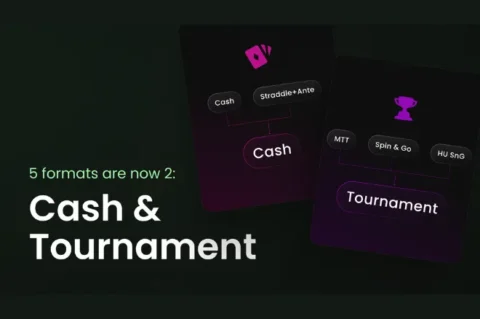
Variance in Cash Games and Tournaments
In cash games, variance is less pronounced. Even when the element of chance is working against you, it’s likely you’ll book small wins among your losses. It’s more likely your results will be somewhat consistent in cash games.
In tournaments, variance can have a much more devastating impact. To get a huge score in a tournament, everything has to line up from start to finish, while one bad beat can derail a run.
What we are seeing here is different levels of volatility within poker. Tournaments are the equivalent of a higher volatility slot game, such as a jackpot slot. You win less often, but when you do win it’s a much bigger prize.
Choosing Games That Match Your Risk Tolerance
Understanding how variance and volatility interact can help you to pick games based on your goals and risk tolerance.
If you’re looking to book frequent small wins and realize your win rate quickly, stick to cash games. If you’re happy to take on the dry spells, downswings, and max volatility to chase jackpot prizes, big field tournaments are for you.
It’s all about understanding your own tolerance for risk. Ask yourself, if you were going to play slots, would you pick a high or low volatility game?
RTP and Win Rate
The main difference between poker and other casino games like slots is that poker has an element of skill. In slots, the “win rate” is predetermined by the RTP. In poker, your win rate depends on how much of an edge you can gain over the rest of the players.
Volatile or not, you wouldn’t pick a slot with a very low RTP over one with a decent RTP. Similarly, you don’t want to play in poker games that offer you a low win rate. Study the game, refine your strategy, and select tables with opponents who are on your level or preferably weaker, so that your poker “RTP” improves.
Variance and Bankroll Management
No matter what casino or poker game you choose to play, variance will also be a huge factor when it comes to short term results. That’s why it’s important to play responsibly using funds set aside that you can afford to lose, known as your bankroll.
Given how volatile slots and poker can be, you should play at stakes that allow you to have hundreds of buy-ins or thousands of spins. This maximizes your game time and gives you the best chance of overcoming the variance.
About The Author