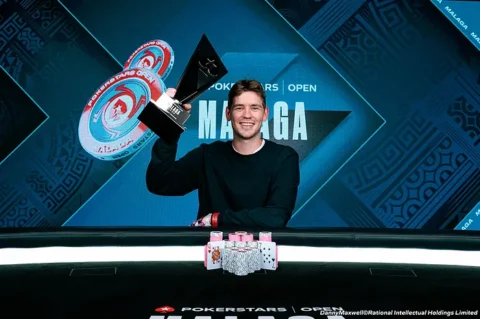
Few players define a national poker scene the way Daniel Negreanu does for Canada. He currently sits in the top 10 of the all-time money list, with over $60 million in lifetime tournament earnings, the only Canadian inside the world’s top 10 and still the country’s top-ranked player by a wide margin. How does a kid from Toronto stay at the top of a game this competitive for three decades?

From Toronto Pool Halls to the Las Vegas Strip
Daniel Negreanu was born in Toronto on July 26, 1974, to Annie and Constantin Negreanu, a working-class couple who had left Romania for Canada in 1967. The future of Canadian poker grew up in a modest east-end neighbourhood, with no obvious path toward the game that would eventually define him.
That changed at age 16. He discovered pool halls, sports betting, and card rooms across Toronto, and quickly realized he had a knack for reading people and crunching odds in his head. He dropped out of high school just one credit short of graduation to play poker full time in the city’s charity casinos, hustling adults twice his age and consistently winning.
By age 21, Negreanu’s bankroll was solid enough for a first run at Las Vegas. The trip was a disaster. Within 24 hours, the Strip had emptied his pockets and sent him back to Toronto to start over.
He rebuilt. He studied. He returned.
In 1998, at age 23, he won the $2,000 Pot Limit Hold’em event at the World Series of Poker for $169,460, becoming the youngest WSOP bracelet winner on record at the time. The poker world started calling him Kid Poker, and the nickname has stuck ever since.
The Numbers That Define a Career
Three decades of tournament poker leave a long paper trail. The figures below capture the milestones that explain why Negreanu’s name keeps coming up whenever Canadian poker is discussed.
|
Career Milestone |
Year |
Figure |
| First WSOP bracelet ($2,000 Pot Limit Hold’em) | 1998 | $169,460 |
| WSOP Player of the Year, first win | 2014 | — |
| WSOP Player of the Year, second win | 2024 | — |
| Big One for One Drop, runner-up | 2014 | $8.3 million |
| Poker Hall of Fame induction | 2014 | — |
| Seventh WSOP bracelet (Poker Players Championship) | 2024 | $1.17 million |
| Eighth WSOP bracelet ($100K PLO High Roller) | July 2026 | $2.25 million |
| Career live tournament earnings | July 2026 | Over $60 million |
Negreanu was the first player in history to win WSOP Player of the Year twice, and the only Canadian sitting inside the global top 10 of all-time tournament earnings. Shaun Deeb has since matched the Player of the Year count with a second title in 2025. No other Canadian has come close to his cumulative earnings either, with the next name on the national list — Daniel Dvoress — trailing by more than $6 million dollars.
Numbers like these are not built in a single hot streak. They are the product of consistent results across three poker eras, a record few active players can claim.
Canada’s Place on the Global Poker Map
Negreanu may be the most visible Canadian poker player, but he is far from the only one drawing attention on the international circuit. Canada has quietly built one of the deepest pools of high-stakes tournament talent in the world, with several players ranked inside the global top 50 by lifetime earnings.
Daniel Dvoress, from Mississauga, sits second on the Canadian all-time money list with more than $54 million in live tournament cashes, including a strong run at EPT Paris in early 2026. Sam Greenwood, the most successful of three poker-playing brothers from Toronto, has crossed $39 million and remains a regular threat in high-roller fields. Behind them, names like Mike Watson and Kristen Foxen continue to log seven-figure scores on the Triton series and the PokerGO Tour.
The regulatory backdrop matters here. In April 2022, Ontario became the first Canadian province to open a competitive regulated market for online poker and casino games, overseen by iGaming Ontario and the Alcohol and Gaming Commission of Ontario (AGCO). Operators like GGPoker, PokerStars, and 888poker now run licensed platforms accessible to Ontario residents, with player pools shared internationally on some sites. Other provinces still rely on their own crown corporations — PlayNow in British Columbia, Loto-Québec in Quebec, the Atlantic Lottery Corporation in the Maritimes — while access to offshore rooms remains tolerated rather than formally licensed.
For readers curious about how that landscape currently looks, this guide to the best online casino in Canada offers a clear overview of the options available to Canadian players.
Plenty of room exists for the next Kid Poker to come through.
What 2026 Looks Like for Kid Poker
At 51, Negreanu shows no sign of stepping back, having played a full schedule during this summer’s World Series of Poker. He won his eighth bracelet and continues to grind hard in pursuit of an unprecedented third Player of the Year title.
Between live stops, he keeps grinding online as the primary global brand ambassador for GGPoker, a role he has held since November 2019.
Three Lessons Canadian Players Can Take from His Approach
A 30-year career leaves more than statistics behind. It leaves a method. Three principles run through Negreanu’s public commentary and explain how he has stayed competitive while most of his early rivals have faded.
The first is bankroll discipline. Negreanu went broke on his first Las Vegas trip at 21 and was forced back to Toronto to rebuild from low-stakes games. He went on the record about that failure many times, framing it as the moment he learned not to play above his means. The lesson Canadian players can take from his approach is simple: never put your full bankroll on the table, and treat every loss as feedback to recalibrate rather than chase.
The second is long-term adaptability. Negreanu has stayed relevant across three distinct eras of poker — the live-read era of the late 1990s, the math-and-equity era of the late 2000s, and the modern solver age. Most pros peak in one era and fade. He retooled his game each time.
The third is continuous learning. Between his MasterClass course, his books, and his ongoing work with solver software, he has kept studying long after he could have coasted. For any Canadian working through the local cash game scene or the regulated online rooms, that habit is the single most copyable part of his playbook.
*All figures courtesy HendonMob
About The Author