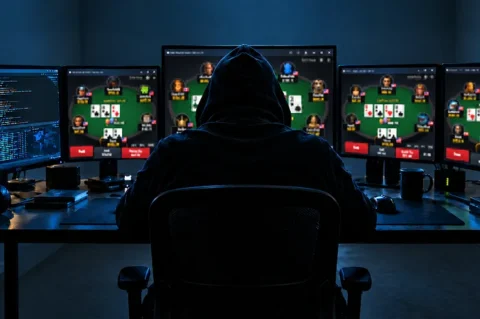
There is always a little pause before a poker player sits down. It might only last a few seconds. Maybe the player is waiting for chips, checking the list, or pretending not to study the table too closely. But they are studying it. Of course they are. Poker players notice things. They notice who is laughing too much, who is buried in their phone, who is talking to the dealer like they have been in that seat since lunch.
They notice the room too. A room has a mood. Anyone who has played enough live poker knows that. Before the first hand, the player is asking the same question they always ask. Does this place feel worth playing?
The Same Habit in a Quieter Room
Live poker gives players a lot of information, even when nothing dramatic is happening. A dealer who keeps the game moving says something about the room. So does a floor person who can settle a dispute without turning it into a performance. A tournament that starts on time says something. A room full of regulars on an ordinary night says something too.
Players collect these small details almost automatically. Ask a live player why they prefer one room over another, and the answer is often more complicated than “the games are good.” Maybe the structures are better. Maybe the staff is sharper. Maybe the room has fewer weird arguments. Maybe the player just trusts it more.
Online, the same habit has to work with fewer clues. A player cannot see how the room handles pressure. They cannot watch the cage. They cannot tell whether the person behind support knows what they are doing. The whole thing arrives dressed as a website, and websites are designed to look confident.
So the player has to slow down a little. They look at the terms. They check payment options. They notice whether the lobby is simple or messy. They see whether the room explains itself clearly, or whether every important detail seems to be hiding one click deeper than it should be.
Online Rooms Have Their Own Tells
Online rooms do not reveal their character as quickly as live poker rooms do. A site can have a polished lobby, a busy game menu, and a generous offer, while still leaving players with practical questions.
As newer licensing spaces such as Anjouan Online Casinos become more visible, careful players are not just looking at the bonus on the front page. They are checking terms, payment options, game providers, support, reviews, and, when useful, a NovaForge casino brands list before deciding whether a room deserves a place in their regular rotation.
That may sound removed from poker, but it really is not. Poker players have always compared rooms. They talk, they ask around. They know which tournaments are worth the drive and which rooms make a simple payout feel like a favor. They remember where the floor is fair, where the structures are decent, and where the promotions bring in real action instead of just noise.
Online research is just the modern version of that table talk. Nobody needs to turn every session into a full investigation. But a player who would never buy into a strange live game without looking around should probably not treat an online lobby like it tells the whole story.
A Full Lobby Can Still Hide a Bad Fit
A busy room is not always a good room for you. That is true live, and it is true online. A packed cardroom might mean the games are great. It might also mean the staff is overwhelmed, the lists are slow, or the only seat open is in a game you should not be playing. Poker players learn that quickly.
Online, the same mistake is easy to make. A lobby can look active while still offering very little that fits a particular player. The site may have plenty of games, but not at the limits they prefer. The tournament page may look impressive until the useful events are all at inconvenient times. The casino section may look huge, but the games a player actually likes may be buried or missing.
Even the smoothest-looking site can become frustrating if the practical parts are clumsy. A confusing cashier. Vague bonus rules. Support that looks available but answers like a wall. These things do not always show up in the first five minutes, but they shape whether a player comes back.
That is why the best read is not always the first read. In poker, a hand can look better before the turn. A table can look softer before you understand who is really driving the action. A room can look attractive before the details start getting in the way.
Why Players Come Back
Every poker room wants new players, but the regulars are the ones who tell the real story.
In a live room, regulars know the rhythm. They know which nights have the best games. They know which tournaments run smoothly. They know when the room is having a bad week. They also know which annoyances are normal and which ones are signs to leave.
Online regulars are harder to see, but they exist in the same way. They return because the room fits into their life. Maybe the games are there when they want them. Maybe the software does not get in the way. Maybe withdrawals have been boring, which is exactly what withdrawals should be. Maybe support answered properly once, and that was enough to build a little confidence.
Most players expect swings, slow nights, irritating opponents, and the occasional awkward rule. What they do not want is uncertainty around the basics. But they want to know what they are agreeing to. They want their money to move without drama. They want the site to work the same way tomorrow as it did today. That is how a room becomes part of a routine.
The Old Read Still Matters
Poker has changed in ways players from older rooms would barely recognize. People study ranges, solvers, blockers, database reports, and hands they would have once just complained about over dinner. The game is more technical now. In many ways, players are better for it.
But poker is not played in a vacuum. The room matters. The lineup matters. The structure matters. The way a place treats players matters. Online poker has not removed that side of the game. It has only moved the evidence around.
The modern player still has to look around before sitting down. Maybe “looking around” now means reading terms instead of watching the floor. Maybe it means checking payment rules instead of standing near the cage. Maybe it means comparing reviews instead of asking a familiar dealer what nights are good.
The poker room has changed. The first impression may come from a phone instead of a casino floor. The chips may be digital, the lobby quieter, the signals easier to miss. But before the first hand is dealt, a careful player is still doing what careful players have always done. Reading the room.
About The Author