These are the 20 most influential people in poker history: from Benny Binion creating the WSOP in 1970 to Chris Moneymaker turning an $86 satellite into $2.5 million, David Sklansky building the mathematical foundations of modern strategy, and John Duthie launching the European Poker Tour.
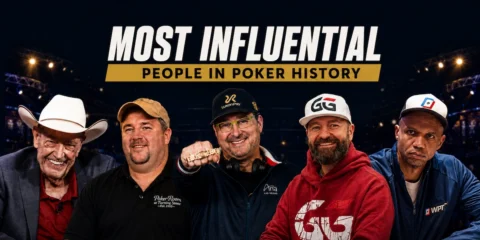
Most lists rank the greatest poker players by bracelets or earnings and call it a day. 13 of the 20 entries here appear on no competing list at all, because most rankings only measure who won the most, not who changed how the game works at a structural level. Where a commonly repeated story turns out to be a myth, we say so.
VIP-Grinders has covered poker since 2013. Every fact on this page is verified against primary sources including WSOP records, published biographies, and on-the-record reporting.
All 20 Influential Poker Figures Ranked
| # | Name | Key Contribution | Era |
|---|---|---|---|
| 1 | Benny Binion | Created the WSOP (1970) and the Poker Hall of Fame (1979); son Jack built the series for 28 years | Founding |
| 2 | Henry Orenstein | Invented the hole-card camera (US Patent 5,451,054), made poker watchable on television | Founding |
| 3 | Chris Moneymaker | Turned an $86 satellite into $2.5 million and triggered the poker boom | Boom |
| 4 | Doyle Brunson | Self-published poker’s first pro strategy bible in 1978, face of the game for 50 years | Founding |
| 5 | Isai Scheinberg | Built PokerStars from a 2001 startup into the platform that sold for $4.9 billion | Business |
| 6 | David Sklansky | Wrote The Theory of Poker, co-founded Two Plus Two, declined the Hall of Fame twice | Strategy |
| 7 | Stu Ungar | Won three Main Events, died at 45 with $800 in his pocket | Playing |
| 8 | Mori Eskandani | Produced High Stakes Poker, Poker After Dark, and WSOP broadcasts; President of PokerGO | Media |
| 9 | Phil Hellmuth | 17 WSOP bracelets, the only player to win a bracelet in five different decades | Playing |
| 10 | Phil Ivey | 11 bracelets, $55 million in live earnings, widely called the greatest all-round player alive | Playing |
| 11 | Daniel Negreanu | 8 bracelets, all-time WSOP earnings leader with $27.7 million+ | Playing |
| 12 | Dan Harrington | 1995 Main Event champion, Harrington on Hold’em introduced the M-ratio to tournament poker | Strategy |
| 13 | Mike Sexton | Co-founded partypoker, WPT lead commentator for 15 seasons, died September 2020 | Media |
| 14 | Johnny Moss | First WSOP champion (1970, decided by vote), the bridge from Texas road gambling to tournaments | Founding |
| 15 | Steve Lipscomb | Created the World Poker Tour in 2002; Lyle Berman invested $3.5 million to launch it | Business |
| 16 | Vanessa Selbst | Only woman to reach GPI #1, three open-field WSOP bracelets, $11.9 million in earnings | Playing |
| 17 | Jason Somerville | Godfather of Twitch poker, first poker streamer to reach 10 million views | Media |
| 18 | Doug Polk | Co-founded Upswing Poker, built poker’s biggest YouTube channel, co-owns The Lodge | Modern |
| 19 | Linda Johnson | Card Player publisher, TDA co-founder, First Lady of Poker | Business |
| 20 | John Duthie | Created the European Poker Tour in 2004, globalized tournament poker | Business |
The Founders Who Built the Game
Benny Binion (and Jack Binion)
Lester Ben Binion was born on November 20, 1904, in Pilot Grove, Texas, and no single person shaped poker history more than he did. He had no formal education. His horse-trader father took him on the road as a boy, where he learned to gamble at county fair trade days.
After running numbers and gambling operations across Dallas for two decades, Binion fled to Las Vegas in 1946 when a reform sheriff was elected. He opened Binion’s Horseshoe in 1951 with a $500 craps limit, ten times higher than any other casino in the city.
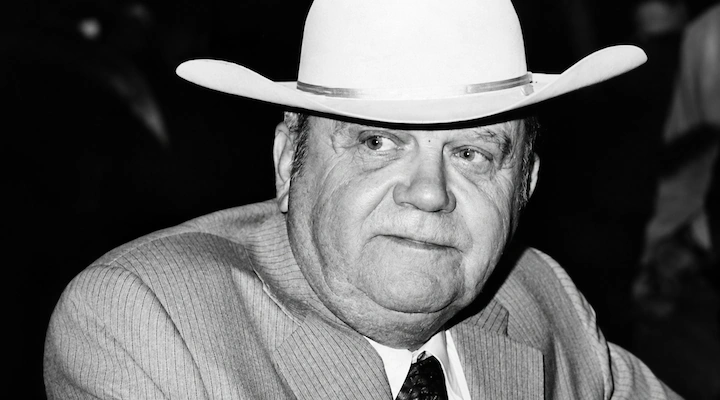
- In 1970, Binion invited seven top players to the Horseshoe for several days of cash games. The winner was decided by a secret peer vote, not a freezeout tournament. Johnny Moss won and received a silver cup.
- In 1972, the $10,000 freezeout format was established. Binion covered half the buy-in for all eight players.
- In 1979, Binion created the Poker Hall of Fame, inducting Johnny Moss as its first member.
Benny died on Christmas Day 1989, worth an estimated $100 million. But the WSOP’s growth from seven players to a global institution was not his work alone.
His son Jack Binion became president of the Horseshoe in 1963 at age 26, after Benny lost his gaming license. Jack ran the WSOP for 28 consecutive years, expanding the schedule, introducing satellites, and building the event’s national profile. He is widely called “the father of the World Series of Poker.”
“They say I’m the father of the WSOP, but it’s kind of like Columbus. If it hadn’t been Columbus, somebody would have come along and discovered America.”
Jack Binion
After a bitter family feud with his sister Becky Binion Behnen, Jack signed over his Horseshoe stake in 1998. Becky’s management cut corners: she cancelled the Poker Hall of Fame Classic, reduced bracelet gold from 18 to 14 karats, and fired WSOP director Jack McClelland. Doyle Brunson and Chip Reese boycotted in protest.
In 2004, Harrah’s purchased the Horseshoe and WSOP brand and moved the series to the Rio. In August 2024, Caesars sold the WSOP brand to NSUS Group (GGPoker’s parent) for $500 million.
Henry Orenstein
Henry Orenstein was born in 1923 in Hrubieszow, Poland. He survived four Nazi concentration camps, including Budzyn and Plaszow, and emigrated to the United States after the war. He built a career in the toy industry, most notably licensing the Transformers concept to Hasbro.
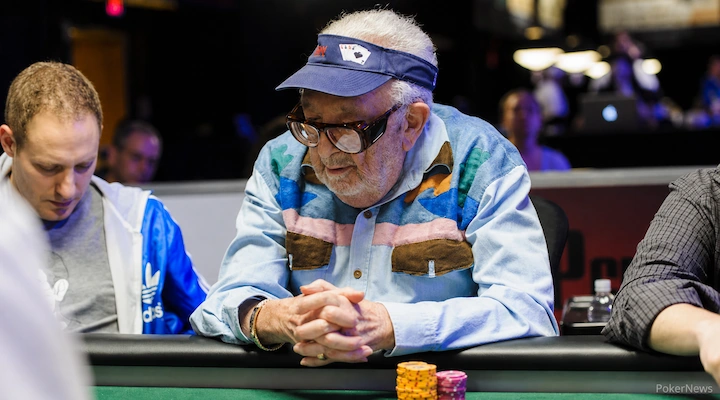
In 1995, Orenstein was granted US Patent 5,451,054 for a device that let television viewers see players’ hidden cards during a live poker broadcast. The idea was simple. Its impact was not.
- UK’s Late Night Poker (Channel 4, 1999) was the first show to use the hole-card camera. Dave "Devilfish" Ulliott won Series 1 and became Britain’s first poker celebrity.
- Orenstein’s friend Mori Eskandani (entry #8 on this list) brought the technology to American audiences through the World Poker Tour and later High Stakes Poker.
- Without the hole-card camera, there is no WPT, no televised boom, and no Moneymaker Effect. Every poker broadcast since 1999 runs on Orenstein’s patent.
Orenstein was also a poker player himself. He won a 1996 WSOP bracelet and was inducted into the Poker Hall of Fame in 2008.
Among poker legends who changed the game without ever winning a Main Event, Orenstein’s impact may be the largest of all. He died on December 12, 2021, at the age of 98.
Doyle Brunson
Doyle Brunson self-published How I Made Over $1,000,000 Playing Poker in 1978 at $100 per copy. Later retitled Super/System, it was the first book ever written by a world-class professional revealing how the best players actually thought about the game.
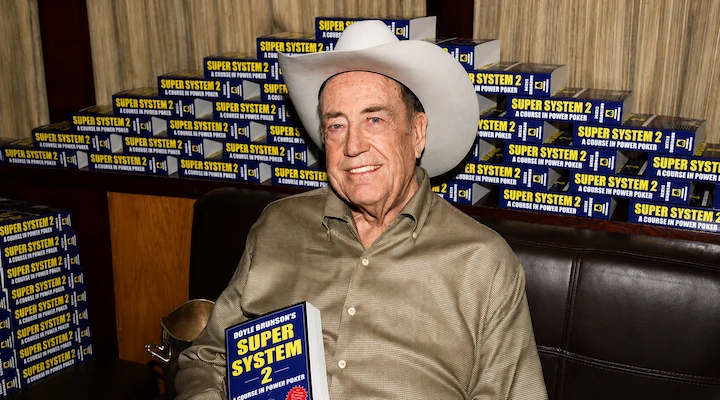
Brunson won 10 WSOP bracelets, including back-to-back Main Events in 1976 and 1977. Both times he won the final hand holding 10-2, turning a junk hand into poker’s most famous card combination. He played his last WSOP event in 2018 at age 84.
Mike Caro contributed 50 statistical tables and the draw-poker chapter to Super/System and built Orac, the world’s first poker-playing AI, at the 1984 WSOP. He coined “weak means strong, strong means weak” and is not in the Poker Hall of Fame.
Super/System changed the information balance of the game permanently. Before 1978, professional poker strategy existed only as oral tradition passed between road gamblers. After it, anyone with $100 could read exactly how a two-time world champion played every hand.
Brunson died on May 14, 2023, at 89. He was a charter member of the Poker Hall of Fame and spent more than 50 years as the most recognized face in the game.
Johnny Moss
Johnny Moss was born on May 14, 1907, in Marshall, Texas, and raised in Dallas. He learned to cheat at cards as a teenager working for local gambling operators, then turned those skills into a legitimate career as a road gambler across Texas, carrying a gun to every session.
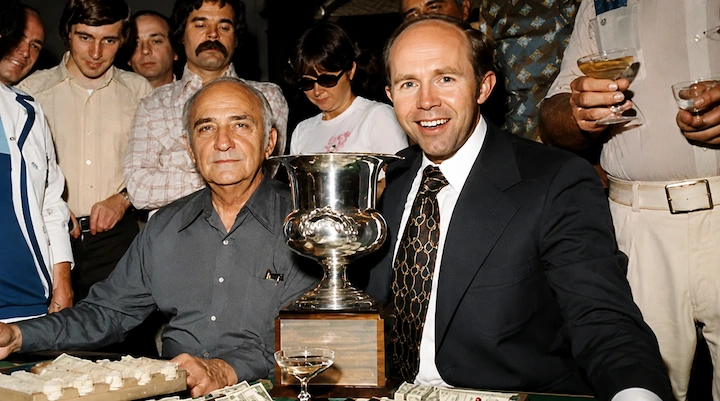
Moss won the first WSOP in 1970 by peer vote, then won the freezeout Main Event in 1971 (beating Puggy Pearson heads-up) and again in 1974. He is one of only two players to win three Main Events, alongside Stu Ungar. He collected nine WSOP bracelets in total and in 1988, at age 81, became the oldest player to win a WSOP bracelet.
Moss was a charter Poker Hall of Fame inductee in 1979. Among famous poker pioneers, he remains the human link between the Texas road-gambling era and modern tournament poker. He died on December 16, 1995, at age 88.
That same year, both Barbara Enright and Henry Orenstein reached the Main Event final table at the series Moss’s 1970 victory had started.
The Boom That Changed Everything
Chris Moneymaker
In 2003, a 27-year-old Nashville accountant named Chris Moneymaker won the WSOP Main Event and changed poker forever. He beat Sam Farha heads-up to collect $2.5 million from a field of 839 entries.
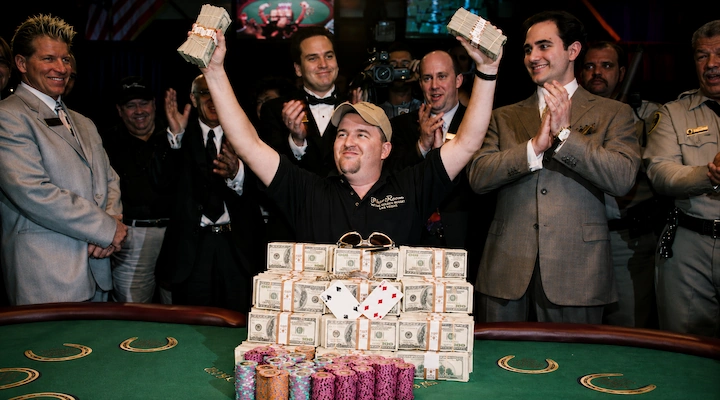
Moneymaker had qualified through a series of online satellites on PokerStars, starting with an $86 buy-in. He had never played a live tournament before. The story was so improbable that ESPN’s coverage of his run became the most replayed poker broadcast in history and drove the explosion of online poker signups that followed.
The year before Moneymaker won, the Main Event drew 631 entries. The year after, it drew 2,576, and by 2006 it reached 8,773. No single result in poker history produced a larger measurable effect on participation.
Isai Scheinberg
Isai Scheinberg was the platform behind the Moneymaker story. The Israeli-Canadian software engineer founded PokerStars in 2001 with his son Mark Scheinberg, building it from a startup on the Isle of Man into the largest online poker site in the world.
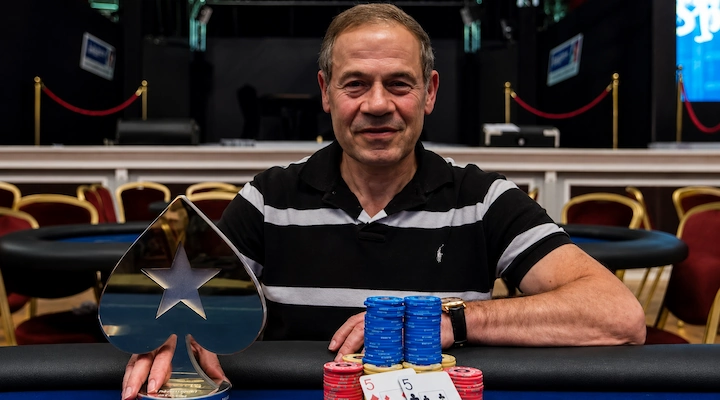
PokerStars hosted the satellite that sent Moneymaker to the Main Event. It also hosted the millions of new players who signed up after watching his win on ESPN. At its peak, PokerStars held more than 60% of the global online poker market.
- On April 15, 2011 (Black Friday), the DOJ shut down PokerStars, Full Tilt, and Absolute Poker for US players. PokerStars was the only site that repaid every player in full.
- In 2014, the Scheinbergs sold PokerStars to Amaya Gaming (later The Stars Group) for $4.9 billion.
- Isai pleaded guilty in 2020 to a single federal count related to operating an illegal gambling business and was fined $30,000. He received no prison time.
PokerStars under Scheinberg was the infrastructure that made the boom possible. Without a platform capable of running satellites at scale, seating millions of concurrent players, and processing global payments, Moneymaker’s $86 never becomes $2.5 million.
Steve Lipscomb (and Lyle Berman)
The World Poker Tour existed before Chris Moneymaker won. That matters because the WPT proved that televised poker could work as a mainstream entertainment product, and it did so using Henry Orenstein’s hole-card camera at a time when no US network would touch the game.
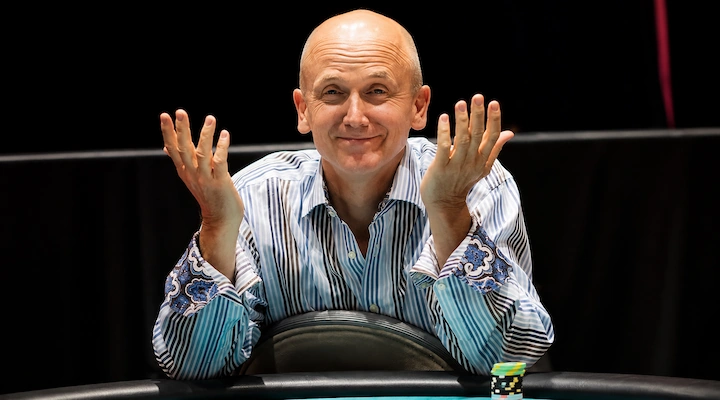
Steve Lipscomb was a documentary filmmaker who conceived the WPT in 2001 but could not fund it alone. Lyle Berman, a three-time WSOP bracelet winner and co-founder of Grand Casinos, invested $3.5 million through his company Lakes Entertainment in December 2001. Lipscomb sold 70% of the company to Lakes, kept 16.5%, and became CEO.
The first WPT broadcast aired in March 2003 on the Travel Channel, two months before Moneymaker’s Main Event run. It was Orenstein’s hole-card camera, produced by Lipscomb’s team, that made the broadcast format work.
Berman had tried the concept 16 years earlier: “I went to Jack Binion in 1985 and said ‘can I get the rights to put your show on TV?’ I had written up a two-page synopsis of it and it was showing the hole cards. We went around and looked to sell it but nobody would put it on TV. Gambling was verboten on television.”
Lyle Berman, PokerListings interview
In May 2018, both Lipscomb and Berman received the WPT Honors Award. Lipscomb died on February 2, 2024, at 59. Among the people who changed poker forever, he is the one most consistently overlooked.
The Players Who Defined Eras
Stu Ungar
Stuart Errol Ungar was born on September 8, 1953, on Manhattan’s Lower East Side. He was a gin rummy prodigy so dominant that by his late teens, no serious player in New York would face him for real money. When gin dried up and casinos banned him from blackjack for counting cards, poker became his last frontier.
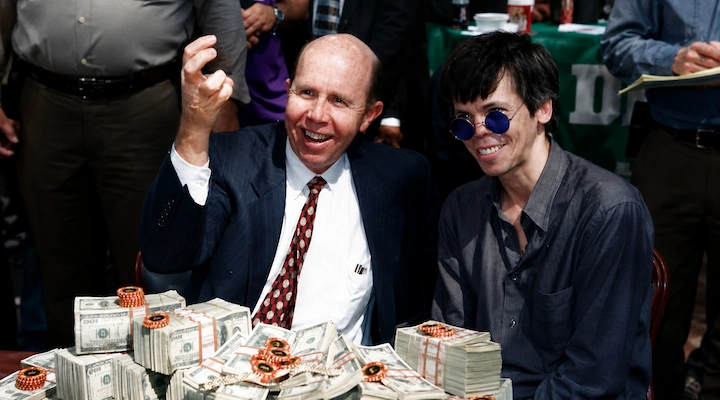
In 1980, Ungar entered the WSOP Main Event with almost no Hold’em tournament experience and beat Doyle Brunson heads-up to win $365,000 from a field of 73. He won again in 1981, beating Perry Green from a field of 75 for $375,000. He collected four WSOP bracelets between 1980 and 1983.
Then cocaine took over. By the mid-1990s, Ungar was broke, physically ravaged, and absent from competitive poker.
In 1997, Billy Baxter staked him $10,000 as the last entry before registration closed. Ungar outlasted 312 players and beat John Strzemp heads-up for $1,000,000, becoming only the second player in history to win three Main Events.
“There’s nobody that can beat me playing cards. The only one that ever beat me was myself, my bad habits.”
Stu Ungar, ESPN interview after his 1997 win
The prize money was gone within months. On November 22, 1998, Ungar was found dead in Room 6 of the Oasis Motel in Las Vegas with roughly $800 in his pocket. He was 45, and the Clark County coroner ruled the cause of death as heart failure from chronic cocaine abuse, not an acute overdose.
The full Stu Ungar story is poker’s starkest reminder that talent alone is never enough.
Phil Hellmuth
Phil Hellmuth has won 17 WSOP bracelets, more than any player in history. He is the only player to win a bracelet in five different decades (1989, 1993, 2003, 2012, 2023), and he holds the record for most WSOP final table appearances with 76.
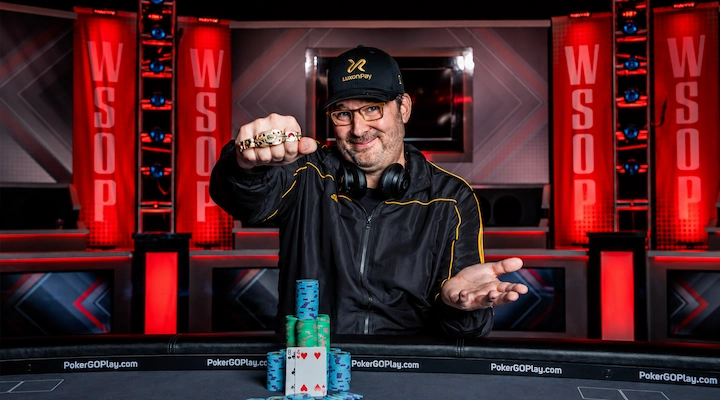
Born July 16, 1964, in Madison, Wisconsin, Hellmuth won the 1989 Main Event at age 24, making him the youngest champion at the time. His most recent bracelet came in 2023 in the $10,000 Super Turbo Bounty for $803,818. Career live earnings exceed $31 million.
Among the most influential poker players on this list, Hellmuth is the one whose impact is measured in longevity. Fourteen of his 17 bracelets have come in Texas Hold’em variants, and his presence at the WSOP has been a constant across four decades. He was inducted into the Poker Hall of Fame in 2007.
Phil Ivey
Phil Ivey holds 11 WSOP bracelets and is widely regarded as the greatest all-round poker player alive. His live tournament earnings exceed $55 million, and he is estimated to have won another $19 to $20 million online during the Full Tilt era.
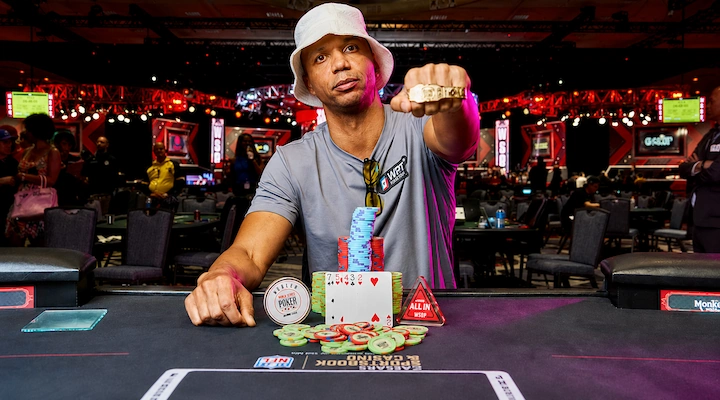
Born February 1, 1977, in Riverside, California, Ivey began playing professionally as a teenager in Atlantic City using a fake ID under the name “Jerome.” His most recent bracelet came in June 2024 in the $10,000 Limit 2-7 Lowball Triple Draw Championship for $347,440, ending a 10-year drought. None of his 11 bracelets have come in No-Limit Hold’em.
He was inducted into the Poker Hall of Fame in 2017 in his first year of eligibility. Where Hellmuth’s legacy is built on volume and longevity, Ivey’s is built on versatility and a level of table instinct that pros describe as supernatural.
Daniel Negreanu
Daniel Negreanu is the all-time WSOP earnings leader with more than $27.7 million in WSOP bracelet event cashes. He holds eight bracelets, winning his most recent at the 2026 WSOP in the $100,000 High Roller Pot-Limit Omaha for $2,257,718.
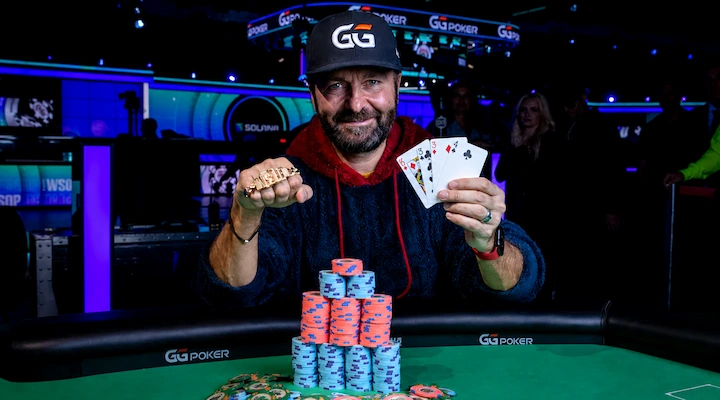
Born July 26, 1974, in Toronto, Negreanu dropped out of high school to play poker full-time and moved to Las Vegas at 21. He is a two-time WSOP Player of the Year (2004, 2013) and the first player to surpass $25 million in WSOP bracelet event cashes. Career live earnings across all events exceed $59 million.
Where Hellmuth and Ivey are defined by bracelets and skill, Negreanu’s influence extends beyond the tables. He spent more than a decade as the public face of PokerStars, became poker’s most visible mainstream ambassador, and remains the player casual fans are most likely to recognize by name.
Vanessa Selbst
Vanessa Selbst is the only woman in history to reach #1 on the Global Poker Index, a ranking she achieved in June 2014. She won three open-field WSOP bracelets (2008 PLO, 2012 10-Game Mix, 2014 Mixed-Max NLH), more than any other woman in open events, and her career earnings of $11.9 million made her the top-earning female tournament player for nearly a decade.
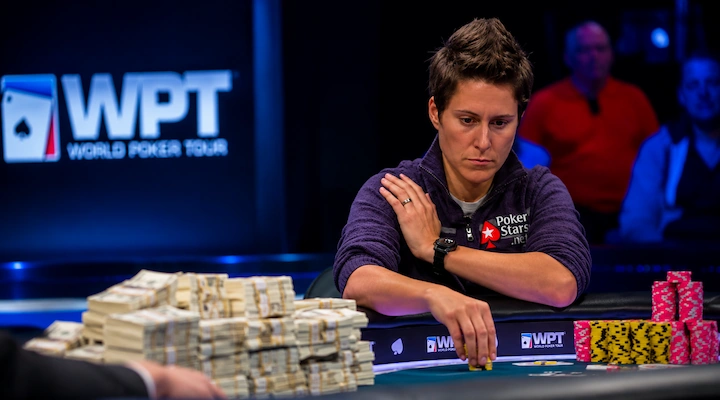
Born July 9, 1984, Selbst studied political science at Yale, earned a law degree from Yale Law School, and joined hedge fund Bridgewater Associates when she retired from professional poker in early 2018. She returned to play selected events in 2025 and is in the Women in Poker Hall of Fame (2022), though she has not been inducted into the main Poker Hall of Fame.
Kristen Foxen passed Selbst on the women’s all-time earnings list in September 2025 with a $1.1 million Triton Jeju cash and now leads with over $19 million. But Selbst’s GPI #1 remains unmatched, and her story is part of a larger shift covered in our famous female poker players guide.
The Minds Behind the Strategy
David Sklansky
David Bruce Sklansky was born on December 22, 1947, in Teaneck, New Jersey. He wrote the mathematical language that modern poker is built on, and he did it decades before solvers existed.
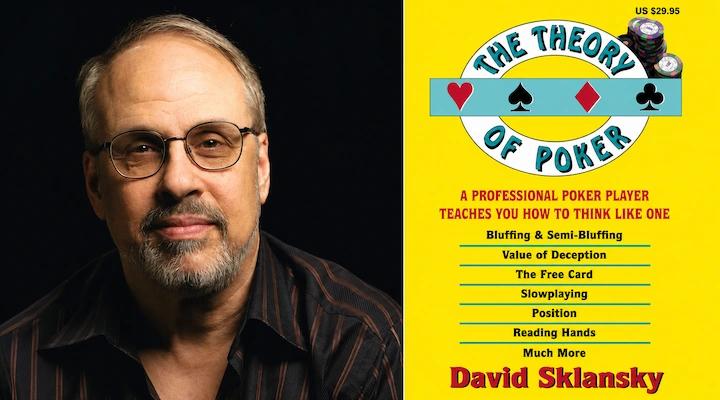
His 1976 book Hold’em Poker was the first widely available text on Texas Hold’em. His 1987 book The Theory of Poker (originally published in 1978 as Winning Poker) introduced the Fundamental Theorem of Poker: every time you play a hand differently from the way you would have played it if you could see your opponents’ cards, they gain. That single concept became the foundation for expected value thinking across the entire game.
- Co-founded Two Plus Two Publishing with Mason Malmuth. The Two Plus Two forums became the centre of poker strategy discussion through the 2000s boom.
- Won three WSOP bracelets (two in 1982, one in 1983) and authored or co-authored more than 14 books on poker and gambling theory.
- Created Sklansky Bucks (luck-adjusted winnings) and the Sklansky-Chubukov rankings, both still used by professionals today.
Sklansky was offered induction into the Poker Hall of Fame twice and turned it down both times. He told PokerNews: “It has people in there that are bad people, and it also has people there who are absolutely not.”
He died on March 23, 2026, in Las Vegas, of heart failure. He was 78. The 2026 WSOP is the first played without the man who gave the game its theoretical spine.
Dan Harrington
Dan Harrington won the 1995 WSOP Main Event, beating Howard Goldfarb heads-up for $1,000,000 from a field of 273. He won his second bracelet at the same series in the $2,500 No-Limit Hold’em event. But his lasting influence came from what he wrote, not what he won.
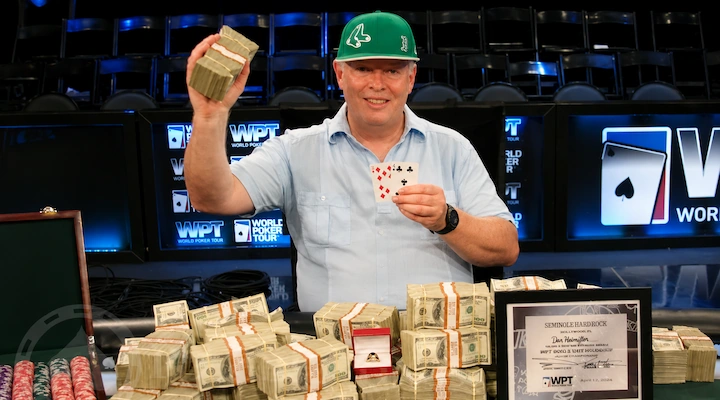
Harrington on Hold’em, co-authored with backgammon champion Bill Robertie, was published in three volumes between 2004 and 2006 by Two Plus Two. It introduced the M-ratio (how many orbits your stack can survive) and the zone system that tournament players still use today. The books arrived at the exact moment millions of new players needed to learn tournament poker strategy, and nothing else filled that gap.
“If Doyle Brunson’s Super/System was the Old Testament, then Harrington on Hold’em was the new poker covenant.”
David Lappin, poker commentator and pro
Born December 6, 1945, in Cambridge, Massachusetts, Harrington is also a US chess master (1971 Massachusetts state champion). He finished 3rd in the 2003 Main Event ($650,000) and 4th in 2004 ($1,500,000), meaning he was at the final table for both the Moneymaker year and the year after. Career earnings exceed $6.6 million, and he was inducted into the Poker Hall of Fame in 2010.
His nickname “Action Dan” is self-chosen and deliberately ironic. Harrington is one of the tightest, most patient tournament players in history.
The People Who Put Poker on Screen
Mori Eskandani
Mori Eskandani was born on January 29, 1956, in Iran and emigrated to the United States in the mid-1970s as an exchange student. He played cash games in Portland card rooms before relocating to Las Vegas in 1985, where he turned a playing career in Seven Card Stud and Limit Hold’em into something far more consequential: he became the man who produced nearly every major poker show in American television history.
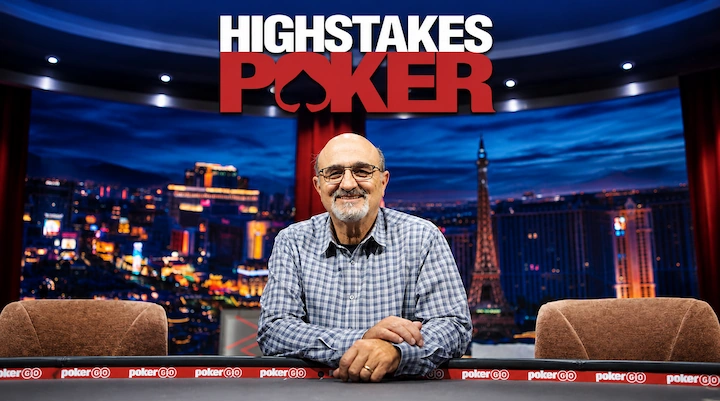
Through his production company Poker PROductions (founded around 2003), Eskandani created or produced the shows that defined poker television.
- High Stakes Poker premiered January 16, 2006 on GSN and ran seven seasons before being revived on PokerGO in 2020. It remains the most celebrated cash-game show ever produced.
- Poker After Dark premiered January 1, 2007 on NBC. It brought top pros into a late-night sit-and-go format that made poker appointment viewing.
- He also produced the NBC National Heads-Up Poker Championship (2005 to 2013) and took over WSOP broadcast production in 2011.
Working alongside his friend Henry Orenstein (entry #2), Eskandani standardized the hole-card camera as the backbone of American poker broadcasting. One US Poker editorial argued that his use of the technology had an equally profound effect on poker’s popularity as Chris Moneymaker’s 2003 win.
He is now President of PokerGO, overseeing all live content from the PokerGO Studio at the ARIA in Las Vegas. He was inducted into the Poker Hall of Fame in 2018. For a deeper look at poker on screen, see our guide to the best poker movies and documentaries.
Mike Sexton
Mike Sexton was born on September 22, 1947, in Shelbyville, Indiana. He served in the US Army’s 82nd Airborne Division from 1970 to 1972, earned a degree from Ohio State on a gymnastics scholarship, and turned pro in poker in 1977.
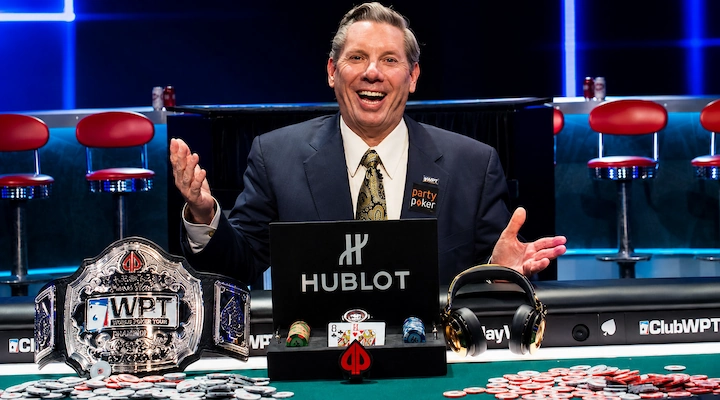
Sexton was a genuine co-founder of partypoker, involved from before the site’s launch and credited with coining its name. He was also the lead commentator on the World Poker Tour for 15 seasons alongside Vince Van Patten, calling the action from the first broadcast in March 2003 until he stepped down in 2017 to become Chairman of partypoker.
“May all your cards be live, and may all your pots be monsters.”
Mike Sexton, WPT sign-off used every episode for 15 seasons
He won one WSOP bracelet (1989 Seven Card Stud Hi-Lo) and won the 2006 Tournament of Champions, beating Daniel Negreanu heads-up for $1 million and donating half to charity. He was formally named the “Ambassador of Poker” at the 2006 Card Player Player of the Year Awards. Career live earnings totalled $6.7 million, and he was inducted into the Poker Hall of Fame in 2009.
Sexton also coined the nickname “First Lady of Poker” for Linda Johnson (entry #19 on this list). He died on September 6, 2020, at his home in Las Vegas of prostate cancer at the age of 72. The WPT renamed its trophy the Mike Sexton WPT Champions Cup in July 2020.
Jason Somerville
Jason Somerville was born on April 15, 1987, on Long Island, New York. He discovered poker in 2004 watching the World Poker Tour with his father and built a six-figure bankroll from freerolls without ever depositing a dollar.
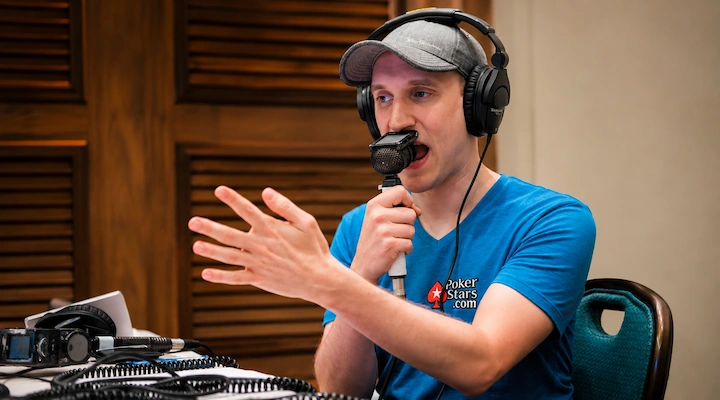
In 2011, Somerville won a WSOP bracelet in the $1,000 No-Limit Hold’em event, beating a field of 3,175 for $493,091. But his structural influence came from what he did next: he built Run It Up, the brand that proved live-streamed poker could sustain an audience.
- Began live-streaming poker on Twitch in early 2014 and became a Team PokerStars Pro on February 27, 2015.
- On March 21, 2016, he became the first poker streamer to cross 10 million Twitch views, having streamed over 1,100 hours the previous year.
- Left PokerStars in early 2020, saying the exclusivity limited the content he could create.
Somerville proved that poker could work as a spectator experience on a platform built for gaming, not television. Before him, poker content was produced for broadcast or YouTube. After him, Twitch became a permanent part of the poker ecosystem, and the streamers who followed (including Doug Polk’s YouTube crossover) owe the format to what Somerville built first.
The Modern Wave and the Global Game
Doug Polk
Doug Polk was born on December 16, 1988, in Pasadena, California. He dropped out of the University of North Carolina Wilmington at 19 to play poker full-time and moved to Las Vegas, where he became one of the most feared heads-up No-Limit Hold’em players online under the screen name “WCGRider.”

Polk won three WSOP bracelets, including the 2017 $111,111 High Roller for One Drop for $3,686,865. In the 2020 to 2021 heads-up grudge match against Daniel Negreanu, he won $1,201,807 across 25,000 hands of $200/$400 online. Career live earnings exceed $10.5 million.
But his structural influence came from off the felt. In 2015, he co-founded Upswing Poker with Ryan Fee and Matt Colletta, building it into what it billed as the world’s biggest poker training company before selling it to ClubWPT Gold in August 2025. His YouTube channel (roughly 450,000 subscribers) became poker’s most watched commentary platform and pioneered the role of the media watchdog, covering the Mike Postle cheating scandal alongside Joey Ingram and the Ali Imsirovic real-time-assistance allegations.
- In January 2022, Polk, Brad Owen, and Andrew Neeme acquired a controlling stake in The Lodge Card Club in Austin, Texas, expanding it to over 80 tables.
- Owen and Neeme created the Meet Up Game (MUG) format, which has driven measurable live poker room traffic across the US since 2017.
- Few figures in poker history span player, educator, media personality, and card room operator simultaneously. Polk does all four.
Linda Johnson
Linda Johnson was born on October 14, 1953, on Long Island, New York. She worked for the US Postal Service and began playing poker in 1974. After finishing fifth in a 1980 WSOP Ladies event, she quit her job and went pro.
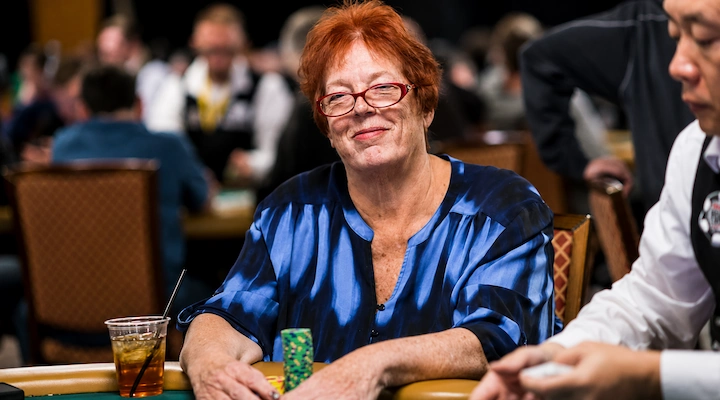
In 1993, Johnson purchased Card Player Magazine and spent eight years as publisher, growing it from a 68-page black and white newsprint publication into a 132-page full-color glossy. She co-founded the Tournament Directors Association (TDA) in 2001 with Matt Savage, Jan Fisher, and David Lamb, standardizing tournament rules across the WSOP, WPT, and poker rooms worldwide.
- Won a 1997 WSOP bracelet in the $1,500 Razz event, becoming one of the first women to win an open WSOP bracelet.
- Co-founded PokerGives.org (2009) alongside Mike Sexton, Jan Fisher, and Lisa Tenner.
- Served as WPT studio commentator for the first six seasons, original chairperson of the Poker Players Alliance, and charter inductee of the Women in Poker Hall of Fame (2008).
Mike Sexton coined her title “First Lady of Poker”, and it stuck because Johnson’s fingerprints are on more poker institutions than almost anyone on this list. She was inducted into the Poker Hall of Fame in 2011.
John Duthie
John Duthie was born on May 13, 1958, in Leeds, Yorkshire, England. Before poker, he was a television director whose credits include Silent Witness (BAFTA Award for Best Drama Serial) and Clocking Off.
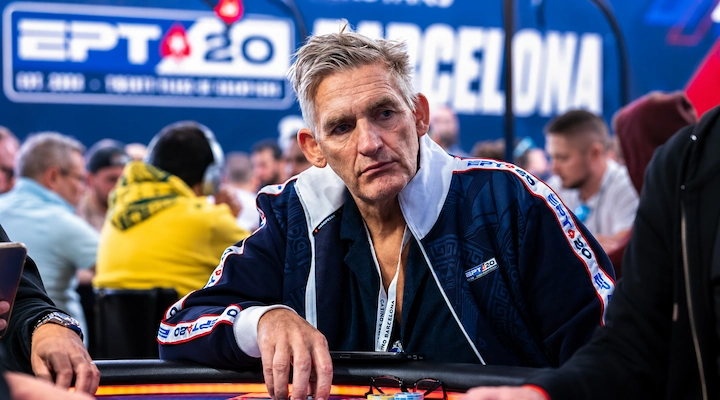
In 2000, Duthie won the inaugural Poker Million on the Isle of Man for £1,000,000. He used the momentum and his television production experience to create the European Poker Tour in 2004, founding it from his kitchen table with PokerStars as title sponsor.
Season 1 ran seven stops across Europe, starting in Barcelona in September 2004. Duthie served as CEO and executive producer for eight seasons before resigning in 2012. He later became President of partypoker LIVE in 2017. Career live earnings exceed $3.2 million.
“I just loved the game, I just really enjoyed it and I’d stopped drinking, so I needed something else to do.”
John Duthie, on why he created the EPT
The EPT became arguably the most prestigious live tour outside the WSOP and was central to poker’s expansion across Europe and into Asia. Its model inspired the creation of the Triton Poker Super High Roller Series (founded 2015 by Paul Phua and Richard Yong), which brought high-stakes tournament poker to Manila, Macau, and destinations where players like Tom Dwan and Phil Ivey had been grinding cash games for years.
Among the greatest poker influencers of all time, Duthie is the one who proved the game could thrive anywhere in the world, not just in Las Vegas.
How We Ranked These Figures
This list ranks the 20 people whose actions had the largest lasting effect on how poker is played, watched, or taught. It does not rank who won the most or who earned the most.
A figure who invented a technology (Orenstein), built an institution (Binion, Scheinberg, Duthie), wrote a book that rewired how players think (Sklansky, Harrington), or created a media format that brought millions of new players to the game (Eskandani, Lipscomb, Somerville) ranks above a figure whose influence ended when they left the table. Players who do appear earned their place through moments that changed the game’s trajectory, not just their own careers.
We verified every fact against primary sources including WSOP.com player records, published biographies, patent databases, and on-the-record reporting. Where a commonly repeated claim turned out to be wrong (the 1970 vote, the 1949 Dandolos myth, the $39 satellite), we corrected it and cited the source.
VIP-Grinders has covered poker since 2013. This list will be updated as new figures earn their place and as the game continues to evolve.
FAQs
Who is the most influential poker player of all time?
The most influential poker player depends on how you define influence. If the question is who changed the game’s trajectory most, Chris Moneymaker triggered the boom with a single $86 satellite. If it is who built the most enduring institution, Benny Binion created the WSOP. If it is who shaped how the game is played at a theoretical level, David Sklansky wrote the foundation that solvers are built on. This list ranks all three approaches together.
Who invented the hole card camera
Henry Orenstein, a Polish-born Holocaust survivor and toy industry entrepreneur, invented the hole-card camera and received US Patent 5,451,054 in 1995. The technology was first used on UK Channel 4’s Late Night Poker in 1999 and later adopted for the World Poker Tour and every major poker broadcast that followed.
Who founded PokerStars?
Isai Scheinberg founded PokerStars in 2001 with his son Mark Scheinberg. They built it on the Isle of Man into the largest online poker site in the world. PokerStars hosted the satellite that qualified Chris Moneymaker for the 2003 WSOP Main Event. The Scheinbergs sold the company in 2014 for $4.9 billion.
Who created the World Poker Tour?
Steve Lipscomb, a documentary filmmaker, conceived the WPT in 2001. Lyle Berman invested $3.5 million through Lakes Entertainment to launch it. The first broadcast aired in March 2003 on the Travel Channel, two months before Moneymaker’s Main Event win. Lipscomb died on February 2, 2024, at 59.
Did Johnny Moss really beat Nick the Greek at the Horseshoe in 1949?
Almost certainly not as the story is commonly told. No contemporary news report of the match has ever been found, and Binion’s Horseshoe did not open until late 1951. Jack Binion clarified in 2017 that any game between Moss and Nick Dandolos took place at the Flamingo, not the Horseshoe, and was not played in public. The real inspiration for the WSOP was the Texas Gamblers Reunion.
Who was the first woman to reach the WSOP Main Event final table?
Barbara Enright finished 5th in the 1995 WSOP Main Event (273 entries, $114,180 prize), becoming the first woman to reach the final table. For 30 years she was the only woman to do so. In 2025, Leo Margets became the second, finishing 7th (9,735 entries, $1,500,000 prize). Enright’s 5th place remains the highest Main Event finish by a woman.
Who created the European Poker Tour?
John Duthie, an English television director who had won the 2000 Poker Million for £1,000,000, created the EPT in 2004 with PokerStars as title sponsor. Season 1 ran seven stops across Europe starting in Barcelona. Duthie served as CEO and executive producer for eight seasons before resigning in 2012.
Who founded the World Series of Poker?
Benny Binion founded the WSOP in 1970 at his Horseshoe casino in Las Vegas. The first event was a series of cash games decided by a secret peer vote among seven players, not a freezeout tournament. His son Jack Binion ran the series for 28 years, expanding the schedule and introducing the satellite system. Harrah’s purchased the WSOP brand in 2004, and NSUS Group (GGPoker’s parent) acquired it in August 2024 for $500 million.
Der Beitrag The Most Influential People in Poker History erschien zuerst auf VIP-Grinders.
About The Author